
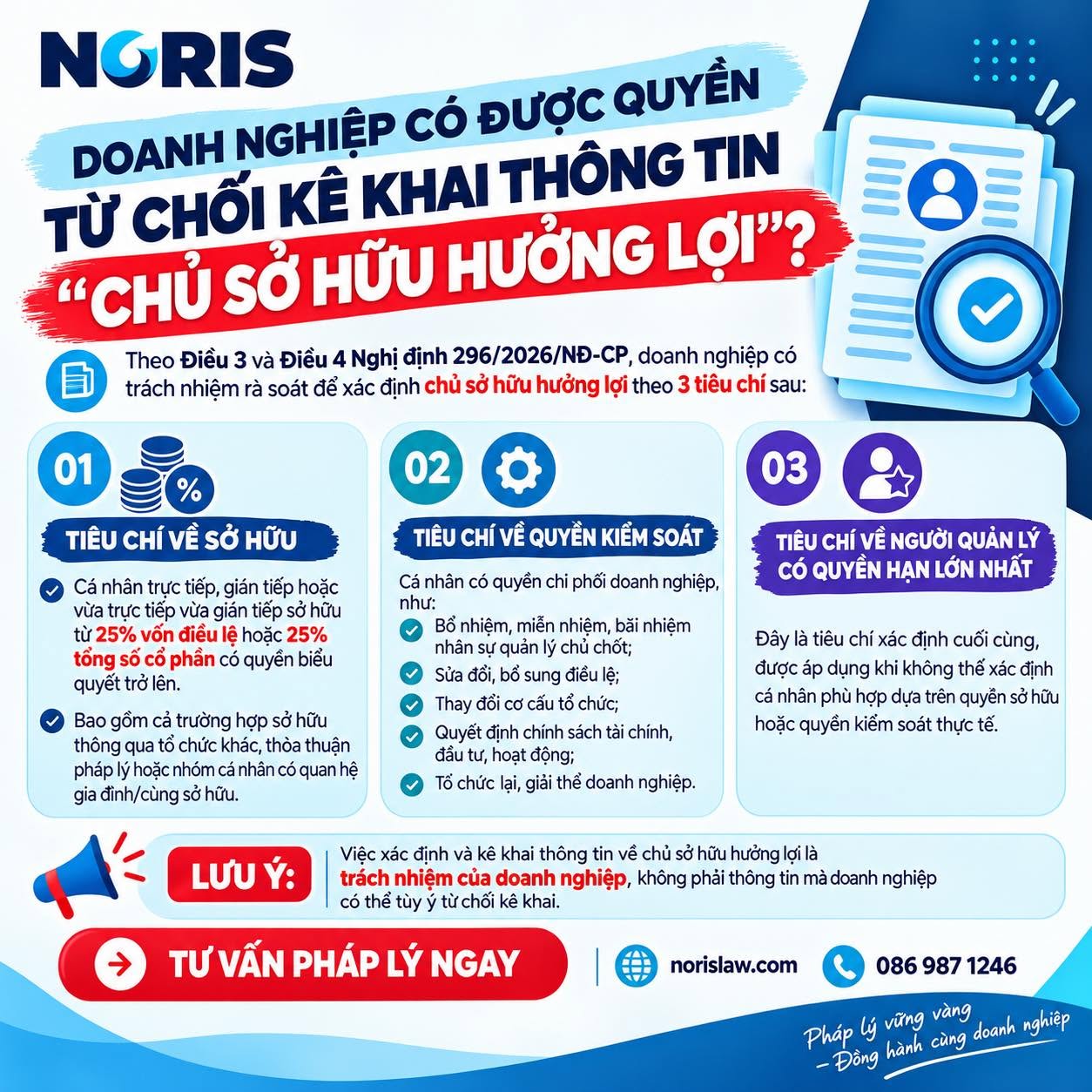
The short answer is no. Where the rules apply, companies have a legal duty to identify and disclose their beneficial owners and retain the relevant information. Disclosure is not optional.
Decree No. 296/2026/ND-CP, effective from 23 July 2026, amends the business registration rules and clarifies how beneficial owners are identified. Businesses should consider the ownership, control and senior management criteria in that order.
Ownership criteria
First, the company should identify any individual who directly, indirectly, or both directly and indirectly owns at least 25% of its charter capital or at least 25% of its total voting shares.
The review should not stop at the person named as the direct holder in the records. Companies should also consider ownership through another organisation, through legal arrangements, or through groups of individuals related by family ties or holding interests jointly by agreement.
Control criteria
An individual may be identified by reference to actual control even where the ownership percentage does not fully reflect that control. Relevant indicators include the power to:
- Appoint, remove or dismiss key management personnel.
- Decide on amendments to the charter or changes to the organisational structure.
- Determine significant financial, investment and operational policies.
- Control the company's reorganisation or dissolution.
Companies should review their charter, agreements between members or shareholders, powers of attorney and the way significant decisions are actually made.
The most senior manager
This criterion applies as a last resort when no qualifying individual can be identified through ownership or control. It ensures that the company still identifies the person with the greatest influence or control over its operations.
What should businesses prepare?
Businesses should map their ownership structure through to the ultimate individuals, review the charter and control arrangements, retain supporting records and update the information when ownership or control changes. Internal records should clearly explain why an individual is, or is not, identified as a beneficial owner.
Inaccurate or outdated disclosures may result in requests for additional business registration documents and create compliance risks. Companies with multi-layered ownership, foreign investors or separate control arrangements should review their records before filing.
Principal reference: Decree No. 296/2026/ND-CP and related business registration rules. This article provides general information; identification in any particular case must be based on the actual ownership and governance records.