
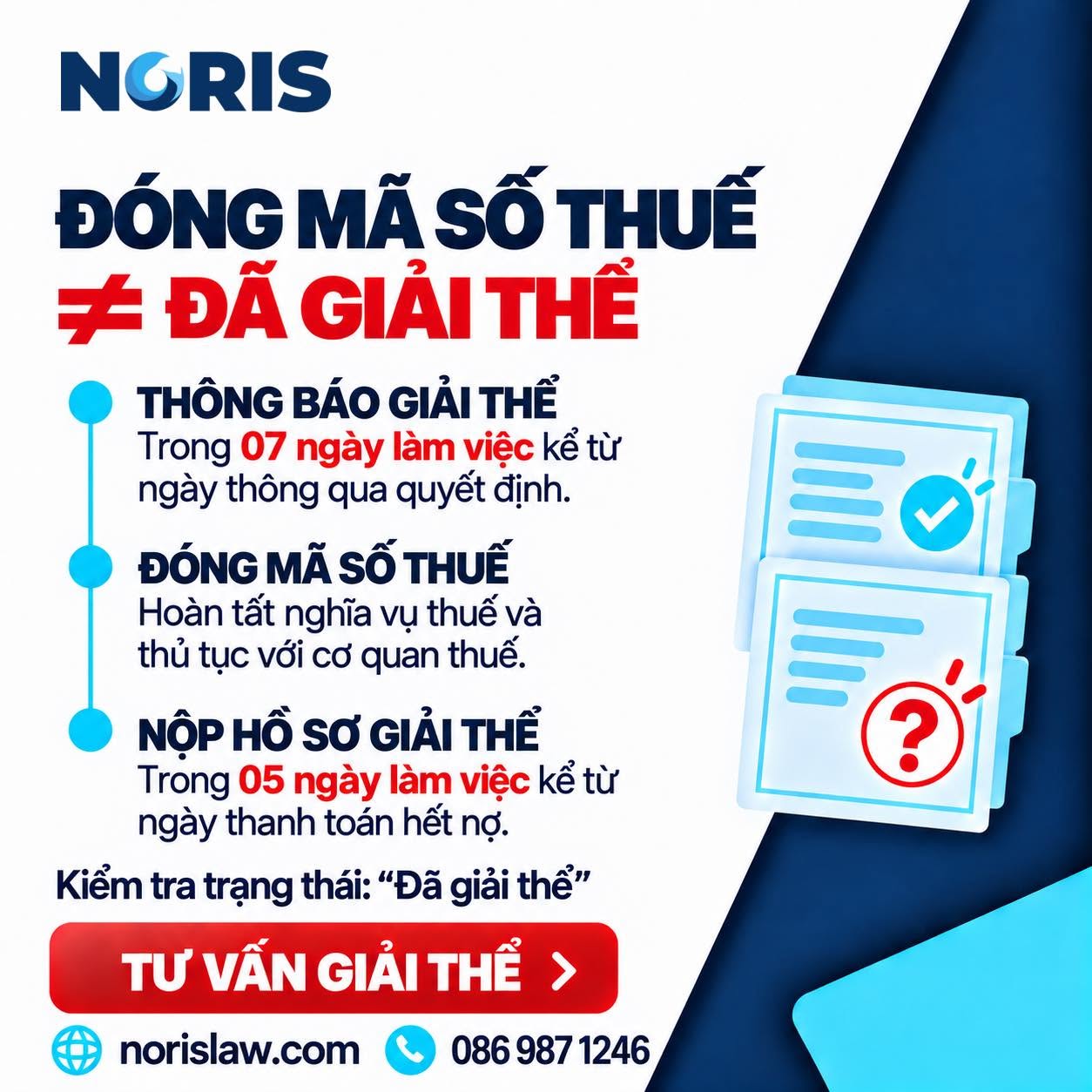
No. A company that has discharged its tax obligations and terminated its tax identification number is not automatically considered dissolved. To cease to exist legally, it must also complete the dissolution procedure with the business registration authority.
Treating tax closure as the end of dissolution may leave the process incomplete, with the company's status still awaiting an update to "Dissolved" in the National Business Registration Database.
Notice of dissolution
After adopting a dissolution resolution or decision, the company must send the notice and supporting documents to the business registration authority within the statutory period. For voluntary dissolution, a key deadline is seven working days from adoption of the resolution or decision.
Before starting, the company should also check the status of its branches, representative offices and business locations so that any remaining units can be closed.
Completing tax obligations and paying debts
The company should work with the tax authority to file returns, pay outstanding taxes, deal with invoices, complete tax finalisation or provide explanations when required, and terminate its tax identification number.
At the same time, it must discharge debts and property-related obligations in the statutory order, including obligations to employees, taxes and debts owed to other organisations and individuals. Dissolution is permitted only where all debts and property-related obligations can be paid and the company is not involved in dispute resolution before a court or arbitral tribunal.
Filing the dissolution application
Once all debts have been paid, the company submits its dissolution application to the business registration authority within the applicable period. Businesses should keep track of the deadline of five working days from the date all debts are paid.
Businesses should regard the procedure as complete only when a status check confirms "Dissolved" and the dissolution information has been published on the National Business Registration Portal.
Checklist before closing the file
- Branches, representative offices and business locations have been dealt with.
- The dissolution decision and notice have been submitted on time.
- Employees, creditors and relevant counterparties have been notified and paid.
- Invoices, returns, tax obligations and the tax identification number have been dealt with.
- The dissolution application has been submitted and accepted by the business registration authority.
- The company's status has been updated to "Dissolved".
This article provides general information. The documents and detailed procedure may vary depending on each company's tax position, debts, dependent units and reason for dissolution.